A Millennial Old Tradition

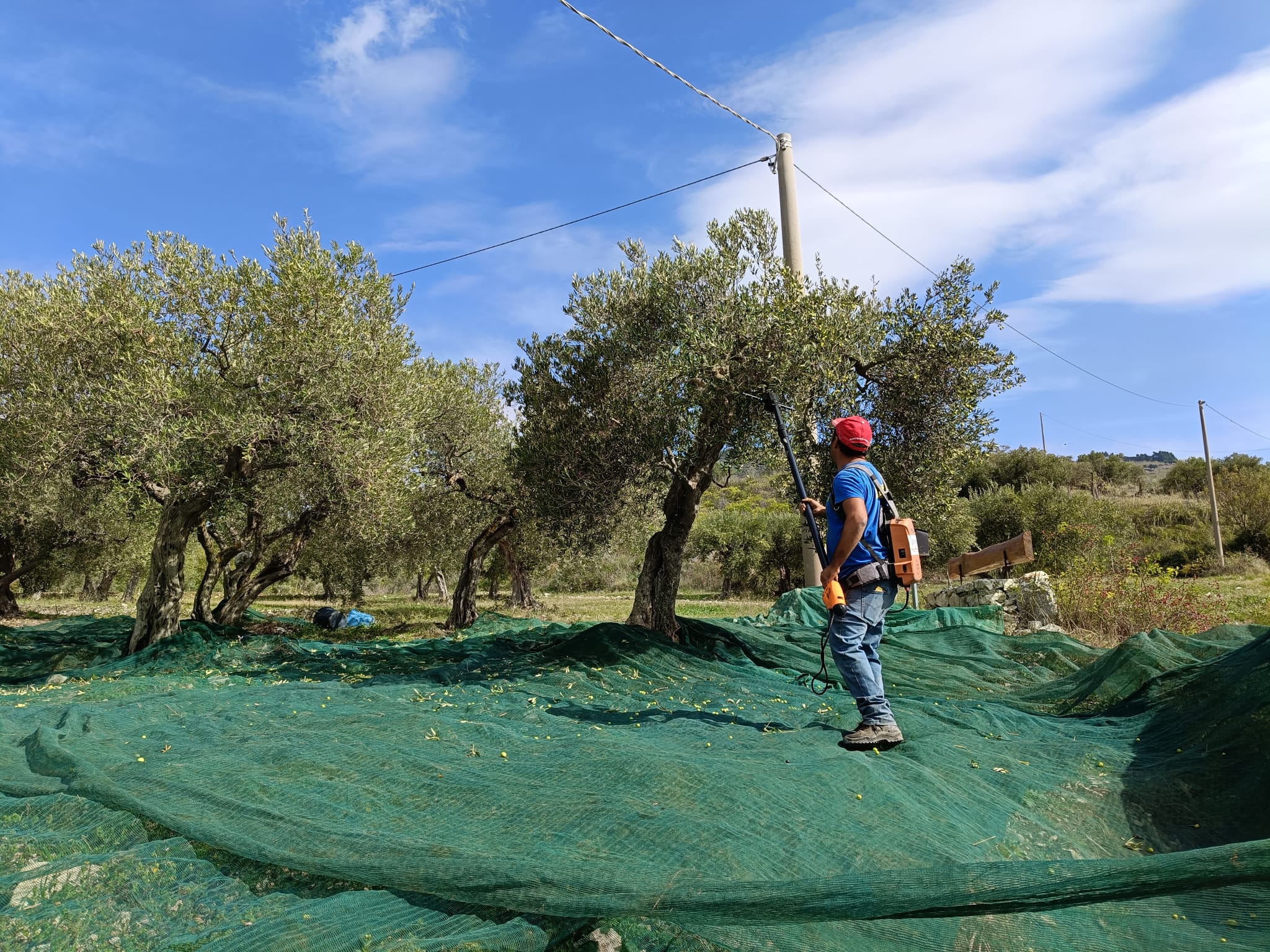
Each year, between late October and early November, an ancient ritual returns to our land: the olive harvest. Our team of skilled hands works with modern tools and timeless gestures, gathering every olive with care.
Beneath the trees, large nets blanket the ground, ready to catch the fruit before it’s carried to the mill.

There, the transformation begins. Within hours of harvest, the olives are cold-pressed, releasing their fragrance and vitality. What emerges is not just oil, but a story — born of Sicilian sun, soil, and centuries of tradition.

Our organic extra virgin olive oil comes solely from certified organic groves in the heart of Sicily. Harvested at peak ripeness and pressed immediately, it preserves the island’s purest essence — more than food, it’s heritage in every golden drop.

100% Sicilian Olives

Cold extracted

Nocellare & biancolilla olives

Harvesting
The journey begins in the groves, where olives reach their peak of ripeness in autumn or early winter. Farmers carefully decide the exact moment to pick them, balancing flavor, aroma, and oil content. Harvesting may be done by hand to preserve the fruit’s integrity or with gentle mechanical shakers that minimize bruising.
Transport & Cleaning
Immediately after harvest, olives are transported to the mill to safeguard their freshness and prevent fermentation. Speed matters—delays can alter flavor and diminish nutritional value. Upon arrival, they undergo thorough cleaning, with leaves, twigs, and residual dust removed using air blowers and washing systems.
Crushing
Once clean, the olives are crushed using stone mills or modern metal crushers. This breakdown of the fruit releases the oil trapped within microscopic cells, forming a paste rich in aroma. Traditional methods give a rustic touch, while modern machines are faster and more consistent. The aim is to achieve uniformity without overheating, preserving delicate flavors and antioxidants.
Malaxation
The olive paste is gently stirred for a set period, allowing small droplets of oil to combine into larger ones. Temperature control here is crucial: cold malaxation preserves flavor nuances and health benefits, while higher temperatures risk degrading them. The texture becomes silkier, and layers of aroma emerge, as chemistry and craft unite.
Extraction
Extraction separates oil from solids and water. In traditional methods, cold pressing gradually forces the liquid from the paste, while modern centrifuges achieve this through rapid spinning. Both aim to respect the integrity of the oil’s natural profile.
Filtration
Some producers filter to remove fine particles, yielding a brighter, clearer oil. This step helps extend shelf life and produces a smoother texture. Unfiltered oils may retain tiny bits of olive flesh, resulting in a more robust taste and slightly cloudy appearance.
Storage
Oil is stored in stainless steel tanks, protected from heat, light, and oxygen. Controlled environments preserve aroma and freshness while preventing rancidity. Professional storage is a silent guardian, ensuring the harvest’s flavors remain intact until the oil meets its final destination.
Bottling
Bottling is where the product meets its audience. Glass bottles or tins are sealed to shield the oil from light and air. Labels tell the story of its origins and craftsmanship, connecting consumers to the landscape it comes from.

Our oil

Everywhere you want

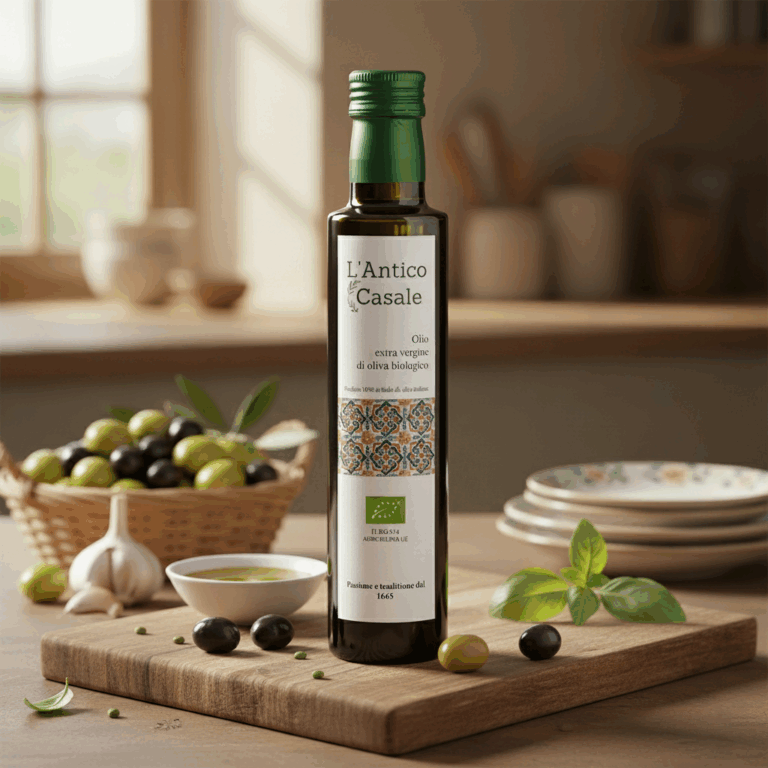
antico_casale_oilbottle_25cl_03
Small Bottle
25 cl

The smallest bottle of our oil, perfect for sampling all the flavors of our olives.
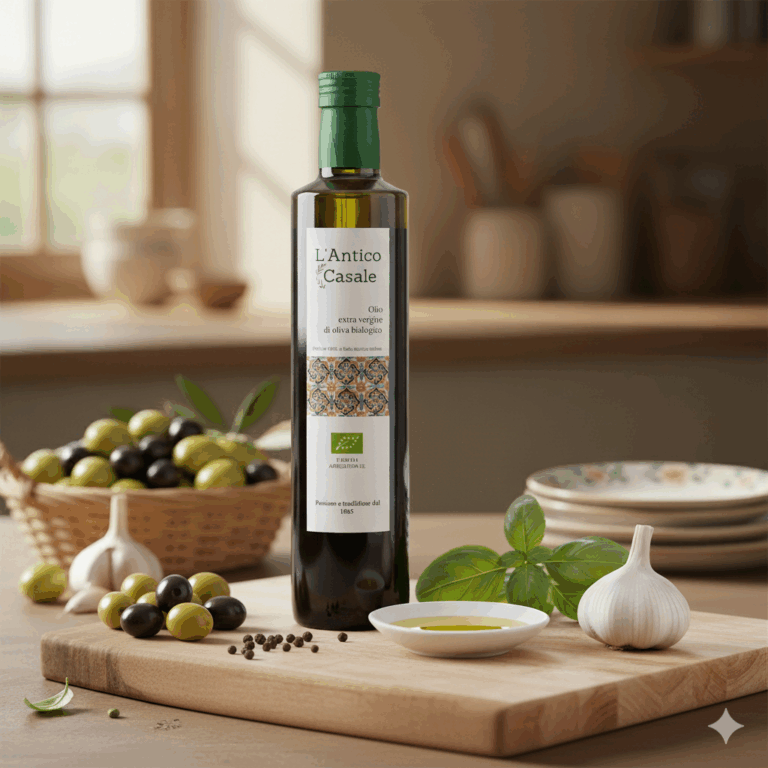
antico_casale_oilbottle_50cl_03
Medium Bottle
50 cl

Our 50 cl bottle, perfect for enjoying all the flavors of our olives every day.
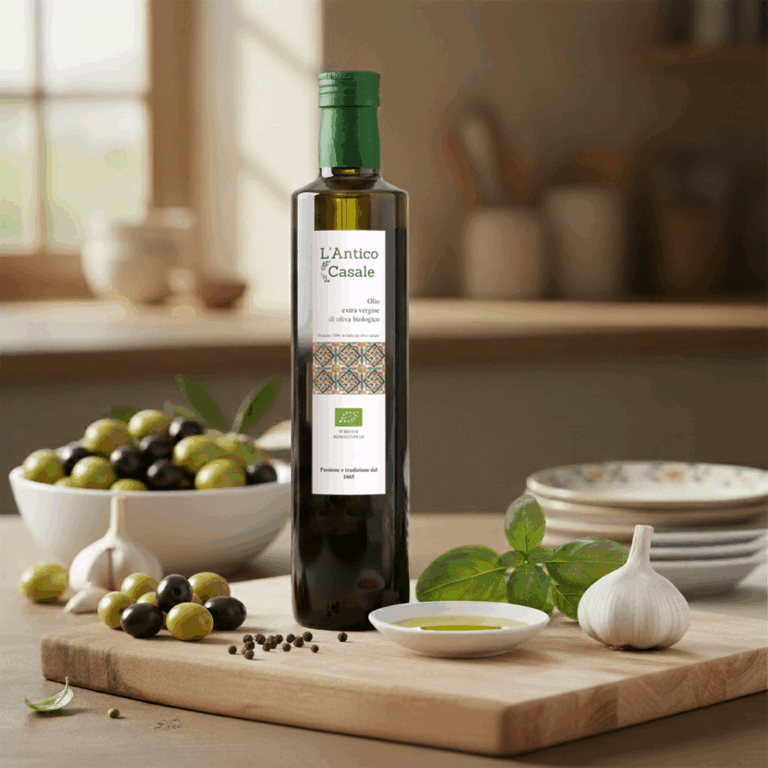
antico_casale_oilbottle_75cl_03
Large Bottle
75 cl

Made for everyday meals, our 75 cl bottle brings out the full flavor of our olives.
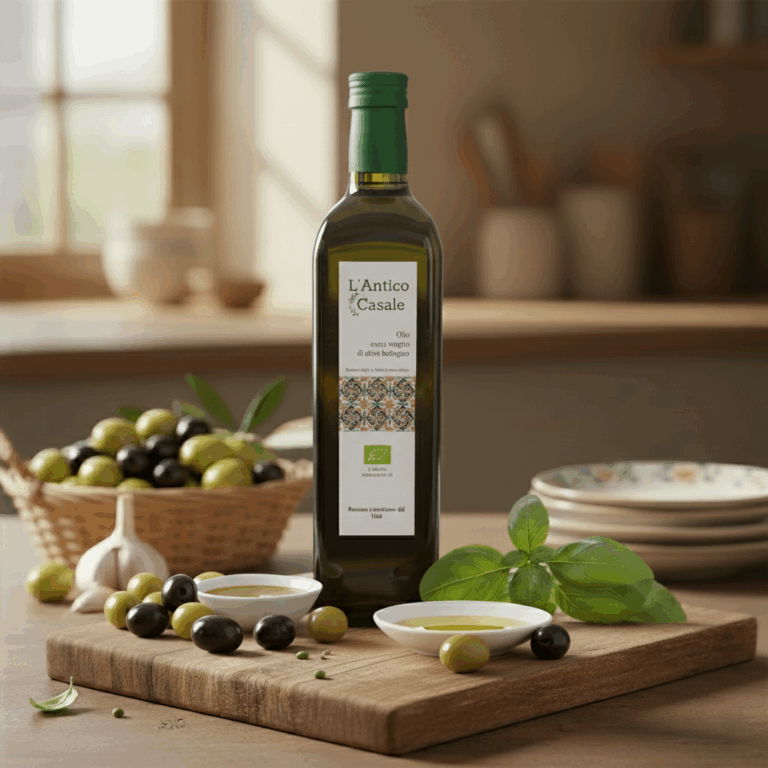
antico_casale_oilbottle_100cl_03
XL Bottle
100 cl

For those who cook and share, ensures freshness and the full taste of our olives.
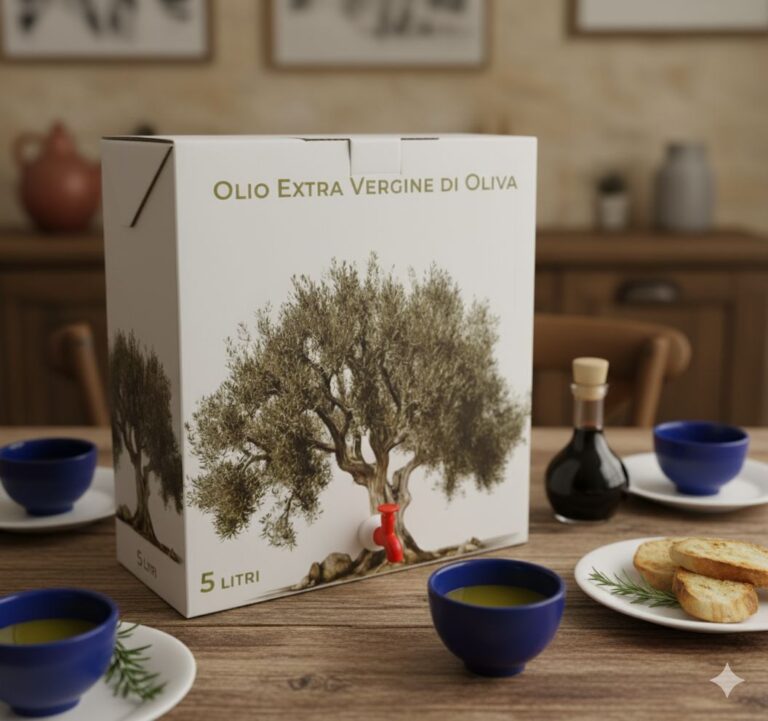
antico_casale_oilbottle_500cl_01
XXL Bottle
500 cl

Brings the authentic aroma of our olives to every dish you create.

A Millennial
Old Tradition

Each year, between late October and early November, an ancient ritual returns to our land: the olive harvest. Our team of skilled hands works with modern tools and timeless gestures, gathering every olive with care.
Beneath the trees, large nets blanket the ground, ready to catch the fruit before it’s carried to the mill.

There, the transformation begins. Within hours of harvest, the olives are cold-pressed, releasing their fragrance and vitality. What emerges is not just oil, but a story — born of Sicilian sun, soil, and centuries of tradition.

Our organic extra virgin olive oil comes solely from certified organic groves in the heart of Sicily. Harvested at peak ripeness and pressed immediately, it preserves the island’s purest essence — more than food, it’s heritage in every golden drop.

100% Sicilian Olives

Cold extracted

Nocellare & biancolilla olives

Harvesting

The journey begins in the groves, where olives reach their peak of ripeness in autumn or early winter. Farmers carefully decide the exact moment to pick them, balancing flavor, aroma, and oil content. Harvesting may be done by hand to preserve the fruit’s integrity or with gentle mechanical shakers that minimize bruising.

Immediately after harvest, olives are transported to the mill to safeguard their freshness and prevent fermentation. Speed matters—delays can alter flavor and diminish nutritional value. Upon arrival, they undergo thorough cleaning, with leaves, twigs, and residual dust removed using air blowers and washing systems.

Once clean, the olives are crushed using stone mills or modern metal crushers. This breakdown of the fruit releases the oil trapped within microscopic cells, forming a paste rich in aroma. Traditional methods give a rustic touch, while modern machines are faster and more consistent. The aim is to achieve uniformity without overheating, preserving delicate flavors and antioxidants.

The olive paste is gently stirred for a set period, allowing small droplets of oil to combine into larger ones. Temperature control here is crucial: cold malaxation preserves flavor nuances and health benefits, while higher temperatures risk degrading them. The texture becomes silkier, and layers of aroma emerge, as chemistry and craft unite.

Extraction separates oil from solids and water. In traditional methods, cold pressing gradually forces the liquid from the paste, while modern centrifuges achieve this through rapid spinning. Both aim to respect the integrity of the oil’s natural profile.

Some producers filter to remove fine particles, yielding a brighter, clearer oil. This step helps extend shelf life and produces a smoother texture. Unfiltered oils may retain tiny bits of olive flesh, resulting in a more robust taste and slightly cloudy appearance.

Oil is stored in stainless steel tanks, protected from heat, light, and oxygen. Controlled environments preserve aroma and freshness while preventing rancidity. Professional storage is a silent guardian, ensuring the harvest’s flavors remain intact until the oil meets its final destination.

Bottling is where the product meets its audience. Glass bottles or tins are sealed to shield the oil from light and air. Labels tell the story of its origins and craftsmanship, connecting consumers to the landscape it comes from.

Our oil

Everywhere you want

Harvest & Cook
Harvest & Cook

Join us for a hands-on culinary experience. Pick fresh produce from our garden and learn to prepare authentic dishes from scratch.